

Etwa 1000 Meter östlich der [post=“153″ text=“Felseninsel Helgoland“] befindet sich Helgolands kleine Schwester – Die Düne. Sie ist ein Refugium für die Natur und erholungssuchende Urlauber.
Bekannt und beliebt ist die Düne vor allem wegen ihrer Badestrände. Der südliche Sandstrand ist im Sommer Ziel vieler Familien. Die Insel ist in West-Ost-Richtung maximal 1,25 km lang und in Nord-Süd-Richtung bis zu 850 m breit. Um 1640 hatte Düne im Norden noch das aus Muschelkalk und Kreide bestehende Wittkliff, das etwa gleich hoch wie die roten Kliffe der Hauptinsel war. Durch den Abbau zur Baustoffgewinnung sowie durch Erosion ist das Wittkliff verschwunden. Außerdem hatte Düne bis etwa 1720 noch eine Landverbindung mit Helgoland, welche durch Sturmfluten zerstört wurde. Im Laufe der Zeit schrumpfte Düneninsel stetig. Um 1935 war Düne nur noch etwa 10 Hektar groß. Im dritten Reich wurde die Insel für militärische Zwecke auf etwa 40 Hektar vergrößert. Die heutige Düne hat diese Größe behalten und ist teilweise eine künstliche Insel.
Seit einigen Jahren hat sich am Nordstrand der Düne eine Kolonie Kegelrobben niedergelassen. Zusammen mit den Seehunden haben Sie Helgoland um eine große Attraktion bereichert.
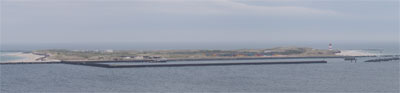

Die Düne
Die Düne von der Insel Helgoland aus gesehen. Gut zu erkennen auch der Leuchtturm im Süden und im Vordergrund die neue Bungalowsiedlung für Gäste.
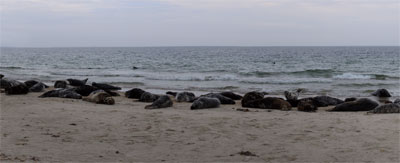
Nordstrand
Das Panorama zeigt eine 360° Ansicht des Nordstrandes der Düne. Im Vordergrund sind einige Kegelrobben zu sehen. Etwas im Dunst verschwindet die [post=“153″ text=“Hochseeinsel Helgoland“].
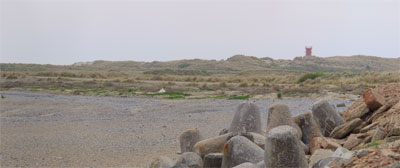
Oststrand
Der Strand im Osten der Düne ist etwas steiniger. Beim Blick ins Inselinnere ist der rote Leuchtturm zu erkennen. Die Aufnahme zeigt einen Ausschnitt von etwa 150°.
[…] In den letzten 10 Jahren hat sich auf Helgolands Schwesterinsel “Düne” eine Kegelrobben Kolonie und Aufzuchtstätte für Jungtiere etabliert. Die Gegebenheiten auf Düne bieten dabei dem Fotografen die Möglichkeit den Tieren besonders nahe zu kommen. […]